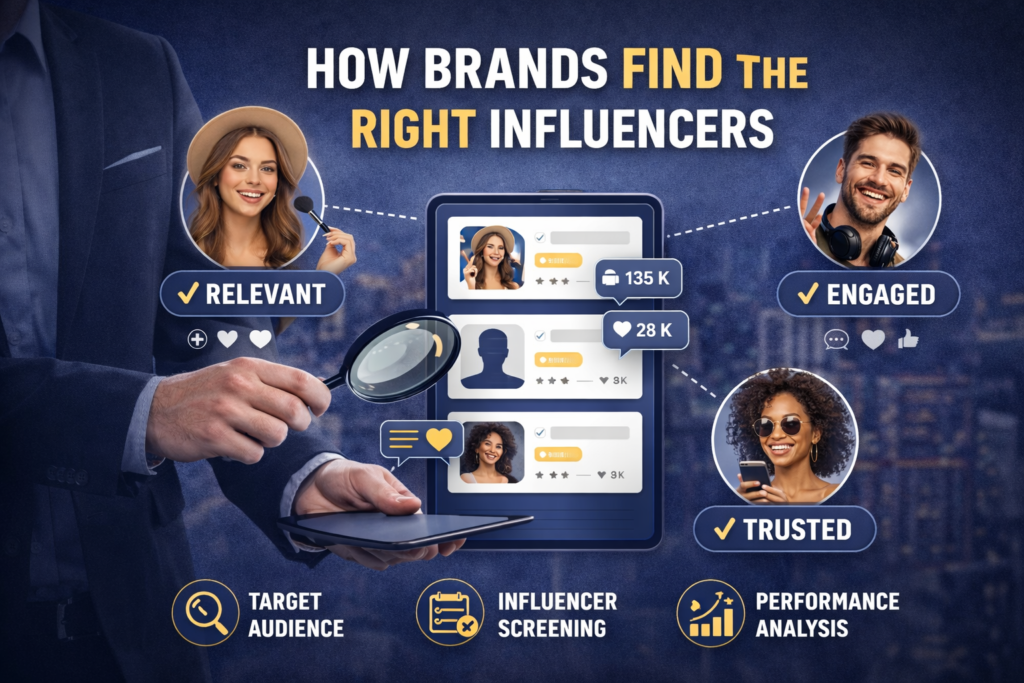
How Brands Find the Right Influencers for Powerful Marketing
How Brands Choose Influencers for Successful Campaigns marketing continues to reshape modern digital branding strategies.
However, success depends on choosing the right influencers.
Therefore, brands follow structured methods to ensure alignment, reach, and credibility.
This article explains how brands identify influencers who drive real impact.
Understanding Influencer Marketing Goals
Every brand starts with clear marketing objectives.
Some brands seek awareness, while others want conversions.
Therefore, goals shape How Brands Choose Influencers for Successful Campaigns selection decisions.
Clear goals also define content style and audience expectations.
As a result, brands avoid mismatched collaborations.
Defining the Target Audience Precisely
Brands analyze audience demographics carefully.
They review age, location, interests, and behavior.
Moreover, brands match influencer audiences with buyer personas.
This approach increases relevance and engagement.
Consequently, campaigns feel authentic and targeted.
Choosing the Right Influencer Category
Influencers fall into nano, micro, macro, and mega categories.
Nano influencers offer high trust and niche engagement.
Meanwhile, macro influencers provide broader exposure.
Therefore, brands balance reach with authenticity.
Each campaign demands a different How Brands Choose Influencers for Successful Campaigns tier.
Evaluating Influencer Content Quality
Content quality matters more than follower numbers.
Brands review visuals, captions, and storytelling ability.
Additionally, they assess posting consistency and creativity.
High-quality content builds stronger audience trust.
Thus, brands favor influencers with professional yet relatable styles.
Analyzing Engagement Metrics Carefully
Engagement reveals true audience connection.
Brands study likes, comments, saves, and shares.
Furthermore, they calculate engagement rates accurately.
High engagement signals loyal followers.
As a result, brands avoid influencers with fake audiences.
Checking Brand-Influencer Value Alignment
Values alignment ensures long-term success.
Brands review influencer opinions and past collaborations.
They avoid influencers with conflicting beliefs.
Therefore, campaigns maintain brand integrity.
Aligned values also build consumer trust.
Using Influencer Discovery Tools
Brands leverage advanced influencer marketing platforms.
These tools filter influencers by niche and performance.
Moreover, platforms provide audience insights and fraud detection.
Technology simplifies influencer shortlisting.
Hence, brands save time and resources.
Reviewing Past Brand Collaborations
Past partnerships reveal influencer professionalism.
Brands study previous sponsored content quality.
They also check audience reactions to promotions.
Positive feedback indicates credibility.
Therefore, experienced influencers gain preference.
Assessing Authenticity and Trustworthiness
Authenticity drives influencer marketing success.
Brands observe how influencers communicate with followers.
Genuine conversations signal trust.
Meanwhile, excessive promotions reduce credibility.
Thus, brands prefer balanced content creators.
Testing Influencers with Pilot Campaigns
Many brands start with small campaigns.
Pilot collaborations reduce financial risk.
They also measure influencer performance accurately.
Successful pilots lead to long-term partnerships.
Therefore, testing ensures smarter investments.
Negotiating Clear Collaboration Terms
Clear communication prevents misunderstandings.
Brands define deliverables, timelines, and compensation.
They also outline disclosure requirements.
Transparency strengthens professional relationships.
Consequently, campaigns run smoothly.
Tracking Campaign Performance Metrics
Brands track performance after campaign launch.
They monitor reach, clicks, and conversions.
Additionally, they analyze return on investment.
Data-driven insights improve future strategies.
Thus, measurement ensures continuous growth.
Building Long-Term Influencer Relationships
Long-term partnerships create consistent brand messaging.
Influencers understand brand tone deeply over time.
Therefore, content feels more natural.
Repeated collaborations boost audience recall.
Strong relationships deliver sustainable results.
Adapting to Platform-Specific Influencers
Different platforms demand different influencer styles.
Instagram focuses on visuals and stories.
Meanwhile, YouTube emphasizes long-form content.
TikTok values creativity and trends.
Brands adapt influencer choices accordingly.
Avoiding Common Influencer Selection Mistakes
Brands avoid choosing influencers based on fame alone.
They also ignore inflated follower counts.
Instead, they focus on relevance and trust.
Strategic selection prevents wasted budgets.
Smart choices maximize campaign success.
Future Trends in Influencer Selection
Data analytics will dominate influencer marketing.
AI tools will improve influencer matching accuracy.
Additionally, niche influencers will gain importance.
Authenticity will remain essential.
Brands will prioritize community-driven creators.
Conclusion: Strategic Influencer Selection Drives Growth
Finding the right influencers requires strategy and research.
Brands balance data, creativity, and authenticity.
Therefore, influencer marketing delivers measurable impact.
Smart selection strengthens brand authority.
Ultimately, the right influencers turn audiences into loyal customers.